
Have you ever worked for a manager who was exceptional at their job but struggled to lead people?
If so, you’ve experienced what organizational psychologists call the Peter Principle: the tendency for organizations to promote employees until they reach a position where they are no longer competent. In other words, success in one role does not automatically prepare someone for leadership.
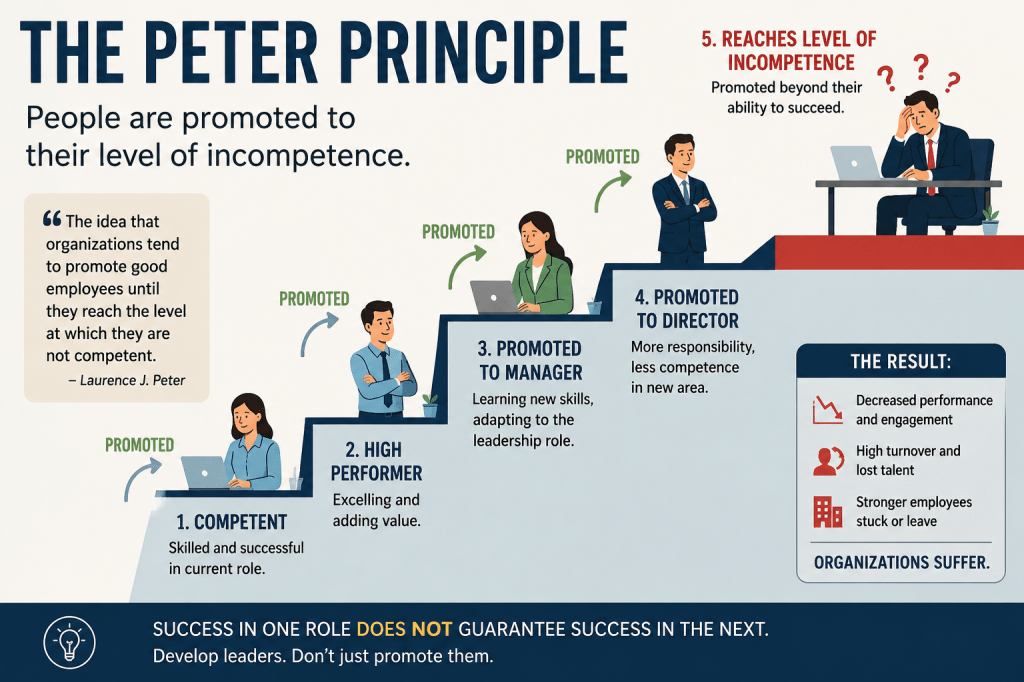
Yet organizations make this mistake every day.
The consequences extend far beyond an awkward management style or a few difficult meetings. Poor leadership affects employee stress, engagement, retention, and ultimately organizational performance. More importantly, it affects people.
When Leadership Becomes a Source of Stress
Many leaders are promoted because they are technically skilled, highly productive, or strong individual contributors. What they often lack is formal leadership development.
Without preparation, new leaders frequently rely on authority rather than influence. Social psychologists French and Raven identified several forms of power, including legitimate, coercive, expert, and referent power. Leaders who feel unprepared often lean heavily on their title and authority because they have not yet developed the expertise, confidence, or relationships needed to lead effectively.
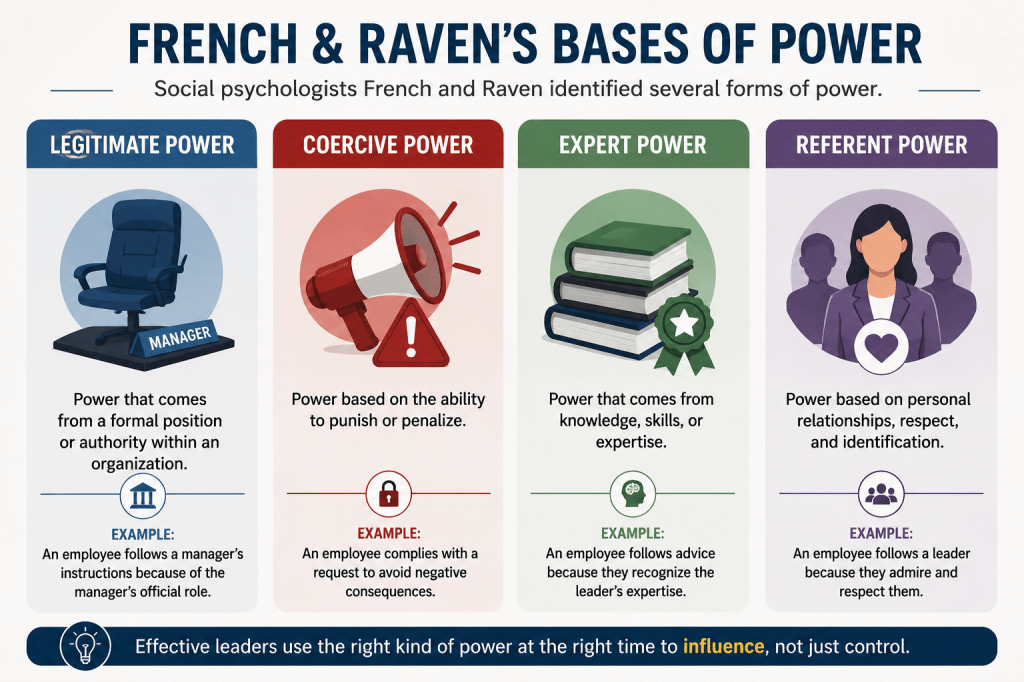
The result?
Employees experience unclear expectations, reduced psychological safety, increased stress, and less trust in leadership.
Research consistently shows that leadership behavior has a direct impact on employee well-being. When leaders create role ambiguity, overload employees, or fail to provide support, stress increases. Over time, that stress contributes to disengagement, turnover, and burnout.
Stress Isn’t Just an Employee Problem
Organizations often treat stress as an individual issue.
Employees are encouraged to practice self-care, take time off, or develop better coping strategies. While these approaches have value, they overlook an important reality: many workplace stressors originate from leadership practices and organizational systems.
Research by Salehi and Tremblay found that work-life integration improves retention largely because it reduces perceived stress. Similarly, Erdogan and colleagues found that supervisory mentoring and support significantly reduce employee stress while improving career success.
In other words, leadership isn’t simply one factor affecting employee well-being—it’s one of the most important factors.
Who Is Most Affected?
Not all employees experience ineffective leadership in the same way.
Early-career employees often struggle with unclear expectations and limited guidance. Without supportive leaders, they may lose confidence and miss critical development opportunities.
Working parents and caregivers face additional challenges when flexibility is not supported. The resulting work-life conflict increases stress and makes retention more difficult.
Experienced employees often respond differently. Rather than struggling silently, they may disengage or leave altogether, taking valuable institutional knowledge with them.
Ironically, leaders themselves suffer as well. Many managers promoted under the Peter Principle experience overwhelming pressure, role overload, and stress because they were never properly prepared for their responsibilities.
The Solution Isn’t Better Managers: It’s Better Leadership Development
Too often organizations wait until leadership problems appear before addressing them.
A more effective approach is to prepare employees for leadership before they are promoted.
Leadership development should focus on skills that are rarely taught through technical expertise alone:
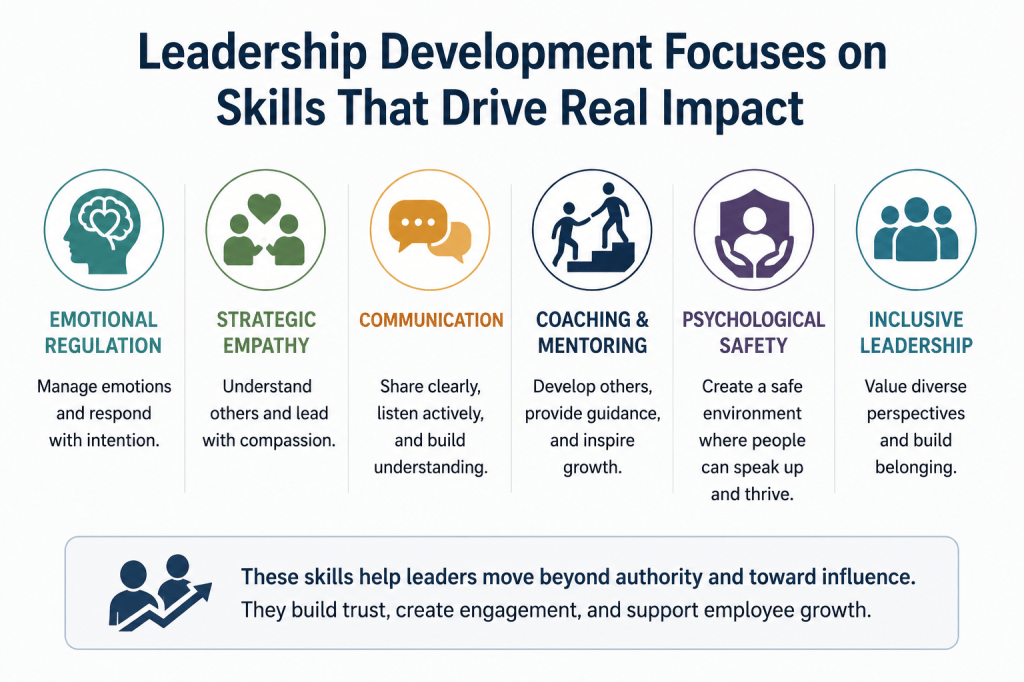
These skills help leaders move beyond authority and toward influence. Instead of relying on control, they learn how to build trust, create engagement, and support employee growth.
This approach aligns with Path-Goal Theory, which suggests that leaders are most effective when they help employees achieve meaningful goals while removing obstacles to success.
Leadership Is Both a Strategic and Human Responsibility
The future of leadership is not about demanding more from employees.
It’s about creating conditions where employees can do their best work without sacrificing their well-being.
Organizations that invest in leadership development create healthier workplaces, improve retention, reduce stress, and strengthen performance. More importantly, they create environments where people feel valued, supported, and capable of growing.
At People First Leadership Labs, we believe effective leadership starts with a simple principle:
People don’t leave organizations nearly as often as they leave poor leadership.
If we want healthier workplaces, we must stop promoting leadership as a reward for technical success and start developing leadership as a skill set that requires intentional growth.
Because when leaders thrive, people thrive—and organizations benefit as a result.
References
Aamodt, M. G. (2010). Industrial/organizational psychology : An applied approach (6th ed.). Wadsworth.
Benson, A., Li, D., & Shue, K. (2019). Promotions and the peter principle. The Quarterly Journal of Economics, 134(4), 2085–2134. https://doi.org/10.1093/qje/qjz022
Erdogan, B., Kudret, S., Campion, E. D., Bauer, T. N., McCarthy, J., & Cheng, B. H. (2024). Under Pressure: Employee Work Stress, Supervisory Mentoring Support, and Employee Career Success. Personnel Psychology. https://doi.org/10.1111/peps.12662
French, J. R. P., Jr., & Raven, B. (1959). The bases of social power. In D. Cartwright (Ed.), Studies in social power (pp. 150–167). University of Michigan Press.
Salehi, A., & Tremblay, D.-G. (2024). Does Work-Life Reconciliation Increase Employee Retention? The Mediating Role of Employees’ Perceived Stress. Relations Industrielles, 79(3-4). https://doi.org/10.7202/1118805ar
 People First Leadership Lab
Leave a comment